Times
The Times is the official newspaper of Oceania, the print instrument through which the Party fixes the meaning of the past. It reports the speeches of Big Brother, the achievements of the Ninth Three-Year Plan and the crimes of traitors; yet every issue that reaches a reader has been composed inside the falsifying apparatus of the Ministry of Truth. A number of the Times might be rewritten a dozen times and still stand on the files bearing its original date, with no other copy existing to contradict it. The paper is not merely an organ of propaganda but the material embodiment of the Party's doctrine that the past is whatever the records say it is - because the records are what the Times says they are.
A Newspaper Built on Rectification
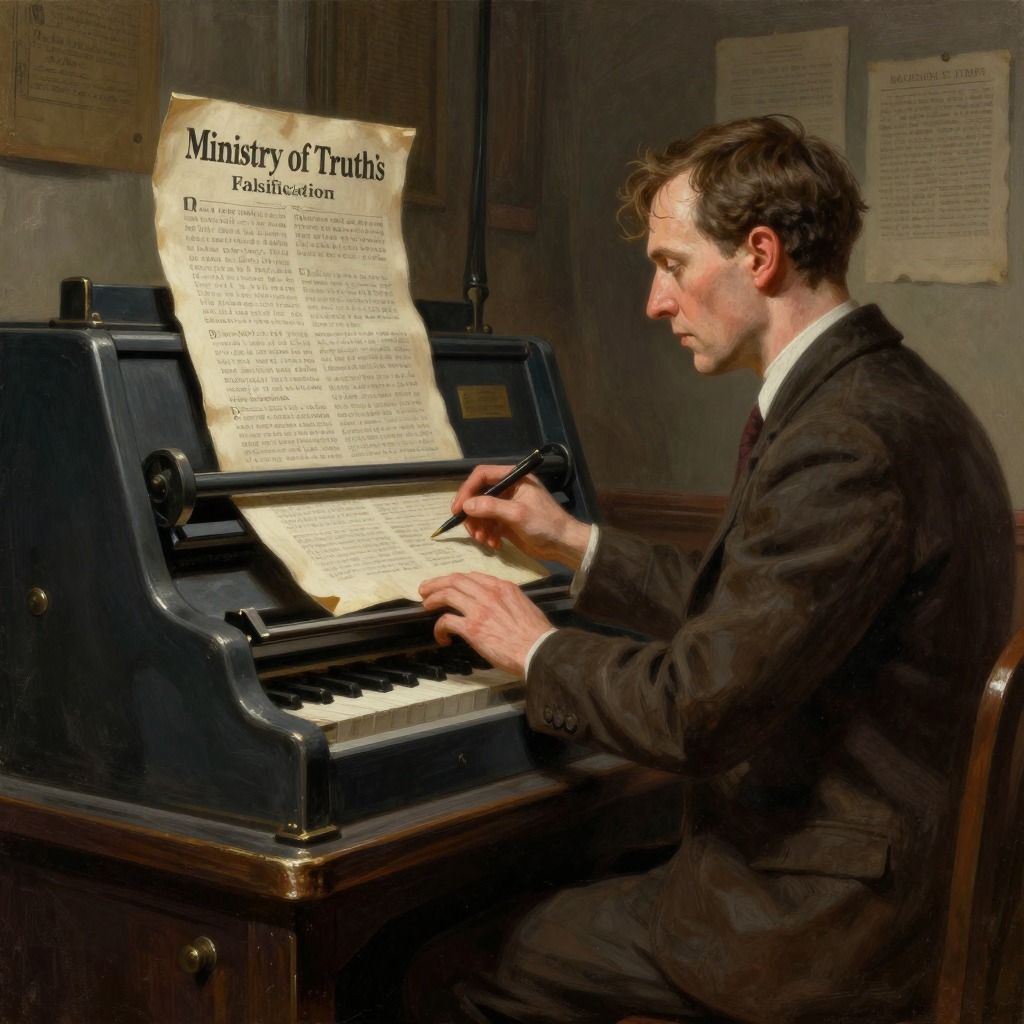
The routines of the Records Department of the Ministry of Truth treat the Times as a text that must never be wrong. One of the four messages that flop out of the pneumatic tube onto Winston Smith's desk reads, in the department's abbreviated jargon, "times 17.3.84 bb speech malreported africa rectify": Big Brother's speech of the previous day, printed in the issue of 17 March 1984, had predicted that the South Indian front would remain quiet and that a Eurasian offensive would be launched in North Africa, when in fact the offensive had been launched in South India. The paragraph has to be rewritten so that the prediction matches the event. Winston dials "back numbers" on the telescreen, calls up the appropriate issues of the Times, and, after making his correction, clips it to the copy and pushes it into the pneumatic tube. When all the necessary corrections have been assembled, the number is reprinted, the original copy destroyed, and the corrected copy filed in its place. The instructions that set this machinery in motion never admit to forgery: they refer always to slips, errors, misprints and misquotations that must be put right in the interests of accuracy.
The paper's figures were as falsifiable as its prose. Rewriting a Ministry of Plenty forecast, Winston notes that the official estimate had put boot production at a hundred and forty-five million pairs, the "actual" output at sixty-two millions, and that he marks the forecast down to fifty-seven millions so as to allow the usual claim that the quota had been over-fulfilled. In any case, he reflects, sixty-two millions was no nearer the truth than fifty-seven or a hundred and forty-five; very likely no boots had been produced at all. "It was merely the substitution of one piece of nonsense for another," he thinks. The Times is the ledger in which such nonsense is made official. "Day by day and almost minute by minute the past was brought up to date."
Newspeak and the Leading Articles
The Times is also the one newspaper whose leading articles are composed entirely in Newspeak, a tour de force that only a specialist could carry out, and Winston Smith has sometimes been entrusted with their rectification. One instruction, translated out of the departmental jargon, runs: "The reporting of Big Brother's Order for the Day in the Times of December 3rd 1983 is extremely unsatisfactory and makes references to non-existent persons. Re-write it in full and submit your draft to higher authority before filing." The non-existent persons are real people whom the Party has decided never existed: the offending article praised an organisation called FFCC and a certain Comrade Withers, who, three months later, had been dissolved or disgraced into "unperson" status.
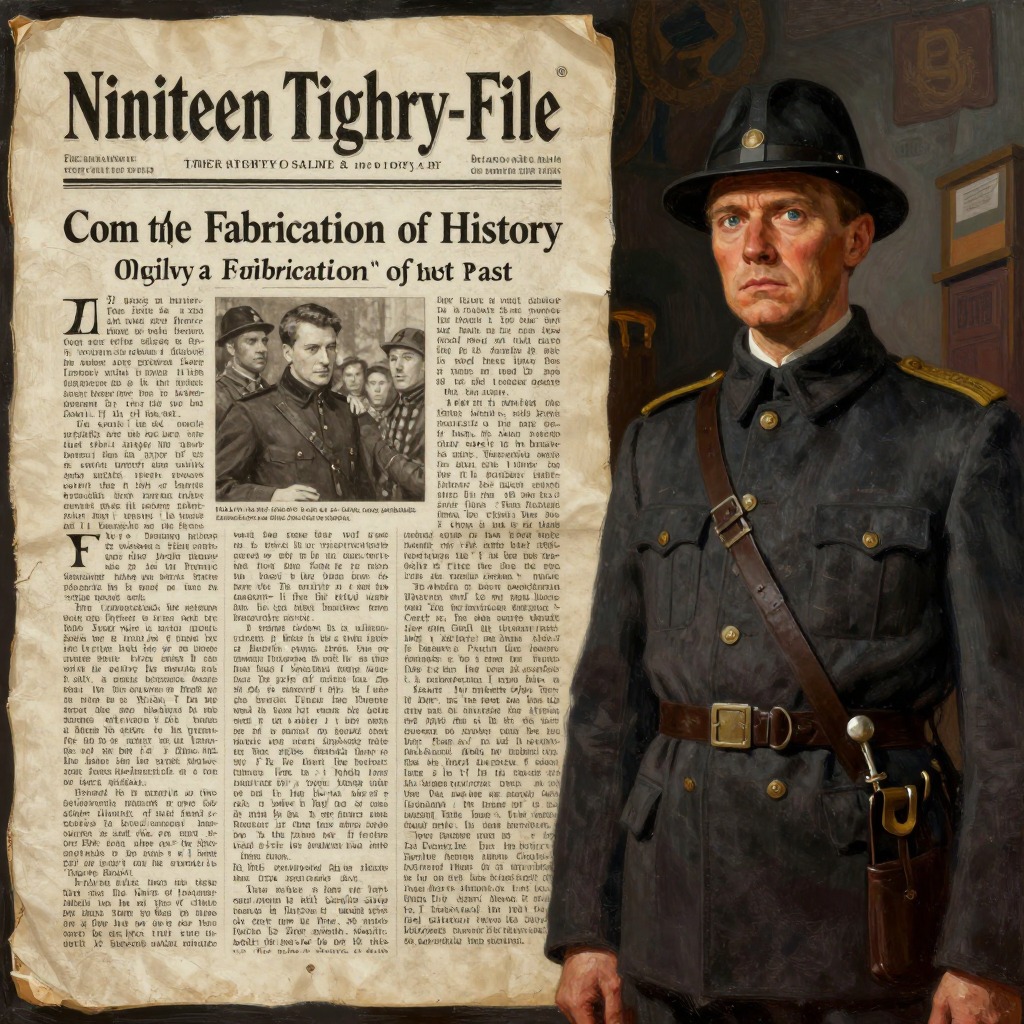
From that instruction Winston invents Comrade Ogilvy, a hero with no existence before the sentence that creates him: at three he refused all toys except a drum, a sub-machine gun and a model helicopter; at eleven he denounced his uncle to the Thought Police; at nineteen he designed a hand grenade that killed thirty-one Eurasian prisoners in one burst; at twenty-three he leapt from a helicopter with his despatches rather than let them fall into enemy hands. Winston decides against awarding Ogilvy the Order of Conspicuous Merit because the cross-referencing would be unnecessary, but he knows the invented dead man will now "exist just as authentically, and upon the same evidence, as Charlemagne or Julius Caesar." It strikes him as curious that "you could create dead men but not living ones."
Terror and Penitence in Print
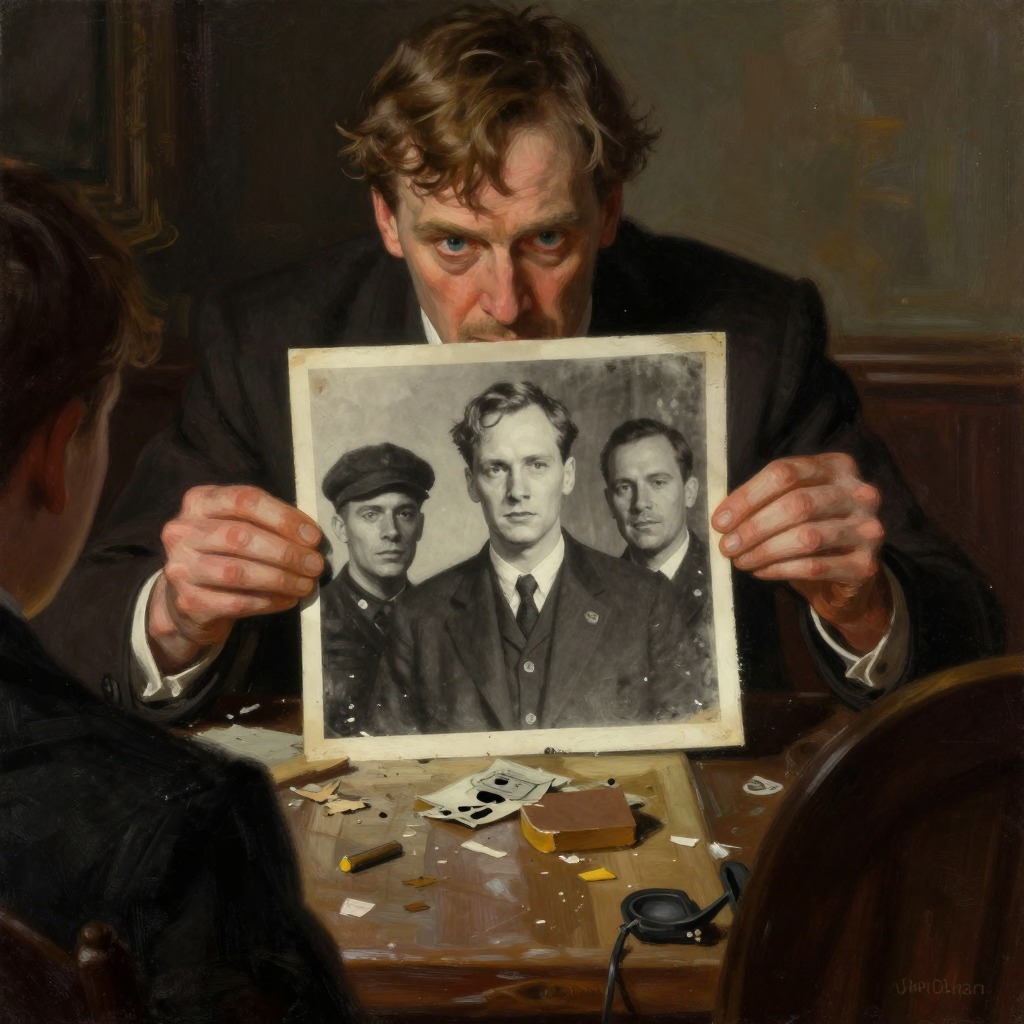
Beyond the fabrication of heroes and statistics, the paper is a pulpit of domestic terror. Hardly a week passed without a paragraph in the Times describing how some eavesdropping little sneak - "child hero" was the phrase generally used - had overheard a compromising remark and denounced his parents to the Thought Police. The paper also publishes the self-incriminations of the Party's own disgraced grandees: Jones, Aaronson and Rutherford, after being pardoned and reinstated, wrote long, abject articles in the Times analysing the reasons for their defection and promising to make amends - articles that were part of the same machinery that would later allow the Party to liquidate them and then deny they had ever existed.
The Palimpsest of Power
The cumulative effect is that the Times operates as the practical definition of the Party slogan "Who controls the past controls the future: who controls the present controls the past." All history, Winston reflects, is a palimpsest, scraped clean and re-inscribed exactly as often as was necessary, and the Times is the most ordinary, most ubiquitous instrument of that scraping. It is also an instrument of the larger propaganda system in which the telescreen could celebrate the raising of the chocolate ration to twenty grammes a week on the day after announcing that it was being reduced to twenty grammes: Parsons swallowed the contradiction with the stupidity of an animal, Syme swallowed it by the more complex route of doublethink, and only Winston was left with the memory of the previous thirty grammes. Because Oceania has no law, the erasure practised in the paper's columns is not legal punishment but the wiping-out of persons who might perhaps commit a crime at some time in the future. The Times is thus the point where the Party's rewriting of the past becomes a daily, material act - a newspaper that makes truth by unmaking it.